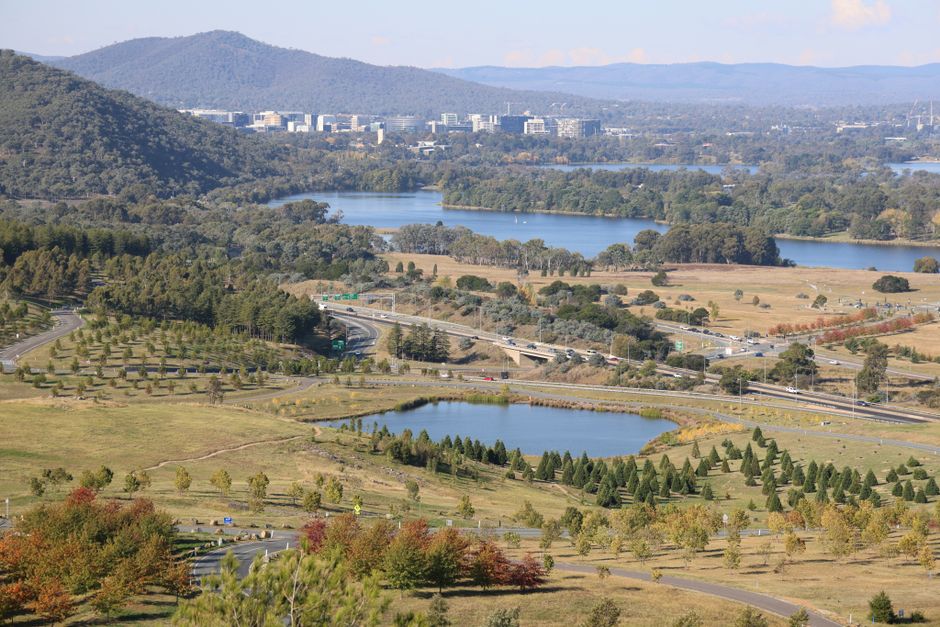
Canberra has a peculiar gift that most of the world's major cities stopped offering decades ago: you can walk from your house to a substantial park within minutes, nearly everywhere you live.
That's not accident. When Walter Burley Griffin designed Canberra in 1913, he carved green space into the city's DNA before a single brick went down. A century later, as property markets across Australia tighten and young families reassess where they want to raise children, that design choice is becoming quietly valuable—particularly compared to Sydney, Melbourne, and Brisbane, where decent parkland remains a postcodes-based privilege.
The numbers tell the story. Canberra has approximately 2,023 hectares of parks and nature reserves—roughly 1.5 times more public green space per capita than Melbourne, according to analysis by the ACT Government's Parks and Conservation Service. That's not just a recreational advantage. It shapes everything from mental health outcomes to property resilience during extreme heat events.
Built differently from the ground up
The difference isn't simply that Canberra has more trees. It's systemic. Griffith neighbourhood, for instance, sits within walking distance of three distinct park networks: Griffith Park itself, the Canberra Nature Park's red-rock ridgelines, and the man-made Lake Burley Griffin shoreline. A family in comparable-income suburbs in Parramatta or Coburg would struggle to find that combination.
The ACT Government has been explicit about defending this advantage. The Urban Park Renewal Program, launched in 2023, allocated $47.8 million over five years to upgrade local parks in suburbs like Weston Creek, Belconnen, and Tuggeranong. Recent upgrades to Mulligans Flat Woodland Sanctuary—a 260-hectare native grassland preserve that sits 15 minutes from the city centre—included new walking trails and interpretive signage that opened in March 2025.
Compare that to Sydney. A 2024 survey by the Trust for Public Land found that approximately 44 percent of Sydney residents live more than a 10-minute walk from quality parkland. In inner Melbourne, the figure sits around 38 percent. Canberra's equivalent metric is closer to 18 percent, though no comparable formal study has been published.
Why this matters right now
The timing isn't incidental. As first-home buyers across Australia delay purchases and property prices plateau, lifestyle and livability have become decision factors that rival mortgage affordability. Last month's Australian Housing Accord found that outdoor space and proximity to green areas ranked in the top five considerations for buyers aged 25 to 40 deciding where to settle.
That demographic is watching Canberra closely. The city's median house price sits at $745,000, significantly lower than Sydney's $1.38 million median, while offering park density that Sydney's new development corridors—particularly around Penrith and Campbelltown—simply cannot match due to existing urban density.
The practical advantage matters too. During Canberra's severe heat waves of February 2024, when temperatures exceeded 40 degrees for five consecutive days, parks and tree-lined streets provided measurable relief. Research from the University of Canberra's School of the Built Environment found that parks in suburbs with high tree canopy coverage stayed up to 3.5 degrees cooler than surrounding streets.
For anyone reconsidering whether to stay put in their current city or explore alternatives, Canberra's park network offers something harder to manufacture: room to breathe without leaving your neighbourhood. That's not marketable hyperbole. It's what happens when a city gets planned before it gets crowded.