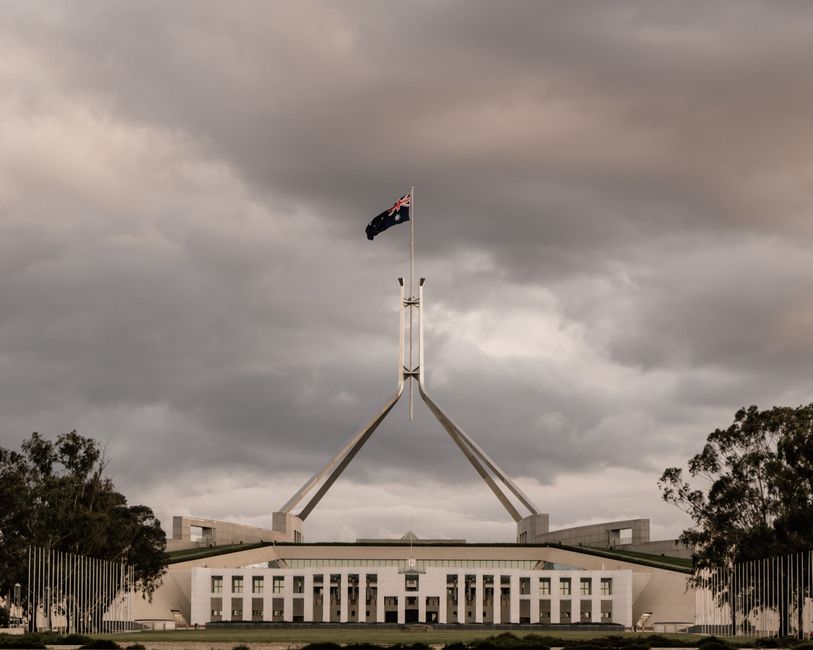
The ACT government this week confirmed it had finalised the preferred alignment for Light Rail Stage 2B, the long-debated extension running from the City to Belconnen via the inner-north corridor, with Infrastructure ACT flagging the Clunies Ross Street route as the primary option ahead of a formal business case submission expected before September. The announcement puts a definitive shape on a project that has spent three years bouncing between planning reviews, federal funding negotiations and community consultations — and it lands at a moment when Canberra's housing market is moving in ways that will amplify every decision made about where the tracks go.
The timing matters. Nationally, property prices are softening and first home buyers are pulling back from the market, spooked by residual mortgage stress and a cost-of-living squeeze that has not eased as quickly as the Reserve Bank's rate cuts suggested it would. In Canberra, that dynamic is layered over a workforce dominated by public servants, many of whom commute daily from Gungahlin in the north or Belconnen in the west. For that cohort, proximity to light rail is not an amenity — it is a financial calculation about how much petrol, time and wear they absorb every year on the Tuggeranong Parkway or Flemington Road.
What the Belconnen Corridor Means for Land Values
Suburbs along the proposed alignment — Dickson, Lyneham, Macquarie and the University of Canberra precinct in Bruce — have already seen developers quietly repositioning medium-density projects to face the corridor. The University of Canberra itself sits at the western end of the proposed Bruce terminus, and UC's campus planning office has been in active discussion with the City Renewal Authority about integrating student housing with future tram stops. Apartments within 400 metres of existing light rail stops on the current Gungahlin line have commanded a premium of roughly 12 to 18 per cent over comparable stock further from the network, according to analysis published by the ACT Planning Directorate in March 2026.
On Northbourne Avenue, where Stage 1 has been operating since April 2019, median unit prices in the Dickson-to-city corridor climbed from $485,000 in 2018 to approximately $620,000 by early 2026. That trajectory is not entirely attributable to rail — Canberra's chronic undersupply of sub-$600,000 stock plays its own role — but the corridor effect is consistently measurable. Planners inside the ACT Treasury have been using that data to model land value uplift along Stage 2B, feeding directly into the federal funding case the government is preparing to put to Infrastructure Australia.
What Happens From Here
The business case goes to the ACT Cabinet first, then to the federal Department of Infrastructure, Transport, Regional Development, Communications and the Arts for assessment under the Infrastructure Investment Program. The Albanese government committed in the May 2025 budget to co-funding up to 50 per cent of Stage 2B's construction costs, currently estimated between $1.4 billion and $1.8 billion depending on final alignment and station count. That federal envelope is contingent on the business case clearing a benefit-cost ratio threshold of at least 1.0 — achievable, Transport Canberra officials have said publicly, but not guaranteed if construction costs move further.
For Canberrans watching this from a Belconnen townhouse or a Gungahlin rental, the practical question is timing. Construction on Stage 2B is not expected to begin before late 2028 at the earliest, meaning the first trams through Macquarie and Bruce are a decade-long proposition. Between now and then, the corridor design will lock in exactly which streets get park-and-ride facilities, which blocks get rezoned for six-storey apartments under the ACT's Housing Strategy, and which neighbourhoods end up carrying the noise and disruption of a decade of civil works. Residents in Lyneham have already submitted more than 340 objections to proposed construction staging routes through residential streets near Wattle Street. Those submissions close on July 18. Anyone with skin in this particular game — owner, renter, landlord or commuter — has two weeks to put something on the record.