tech
Dhaka Tech Startups: Why It's Outpacing South Asia
Discover why Dhaka's tech startup ecosystem rivals Bangalore. Explore 3,200+ active ventures, ultra-low costs, and a 170M-person market driving innovation.
4 min read
Updated 14 h ago
tech
Discover why Dhaka's tech startup ecosystem rivals Bangalore. Explore 3,200+ active ventures, ultra-low costs, and a 170M-person market driving innovation.
4 min read
Updated 14 h ago
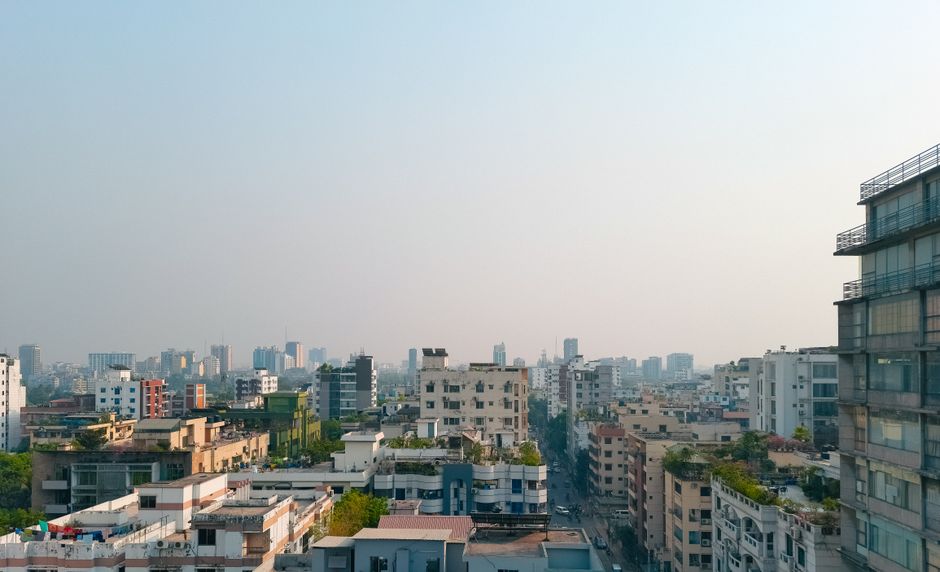
Dhaka added more than 400 registered tech startups in the first half of 2026, according to figures compiled by the Bangladesh Startup Authority in Agargaon, pushing the national total past 3,200 active ventures. A disproportionate number of those are clustered inside a single square kilometre of Mohakhali — roughly bounded by the BRAC University campus and the DOHS commercial strip — a density that veteran investors now compare, without embarrassment, to parts of Bangalore's Koramangala a decade ago.
The timing matters. Global venture capital dried up significantly in 2023 and 2024, forcing founders everywhere to build leaner. Dhaka's ecosystem had already been operating lean by necessity for years. That discipline, combined with a domestic market of 170 million people and a median age of 27, means the city enters the second half of 2026 with structural advantages that money alone cannot manufacture quickly elsewhere.
Walk the stretch from Mohakhali Wireless Gate down to Gulshan-1 on any Tuesday morning and the office listings tell the story. Co-working desks at Anchorless Bangladesh — the accelerator that backed ShajGoj and several fintech names before either became household terms — run at roughly 8,000 taka a month, less than $75 at current exchange rates. That compares with $400 or more for equivalent space in Nairobi or Ho Chi Minh City, two cities frequently cited in the same breath as emerging tech hubs. The cost gap is not a temporary anomaly; it is baked into Dhaka's labour and real estate arithmetic.
Shohoz, founded in 2014 and still headquartered near Karwan Bazar, is the most cited local example of a company that leveraged Dhaka's constraints into a feature. Its logistics network was engineered around roads that GPS mapping tools routinely misread and addresses that do not conform to any postal standard. That engineering problem, solved locally, turned into exportable product logic that the company has pitched to investors in Singapore and London. bKash, operated by BRAC Bank and headquartered in Gulshan-2, remains the more dramatic case: 65 million registered users as of its last public disclosure, a penetration figure that gives any founder building a payment layer an immediate distribution channel most comparable cities cannot offer.
Bangladesh produces roughly 50,000 computer science and engineering graduates annually, a number that has climbed every year since the government's Digital Bangladesh initiative set enrollment targets back in 2009. The quality is uneven, founders and hiring managers will admit privately, but the sheer volume creates a self-correcting market. Junior developer salaries in Dhaka sit between 25,000 and 45,000 taka per month for solid mid-tier talent — a range that allows early-stage companies to hire full engineering teams before raising a Series A.
The Bangladesh Hi-Tech Park Authority's facility in Kaliakoir, 40 kilometres northwest of the capital, now hosts more than 120 technology companies and has approved a third expansion phase expected to open by December 2026. The park is not glamorous, and commute times from Dhaka remain a legitimate grievance among employees. But the combination of subsidised rent, fibre connectivity, and tax exemptions through 2032 has persuaded several Korean and Japanese hardware firms to establish R&D units there, seeding a hardware culture that Dhaka's software-dominant scene has lacked.
For founders considering Dhaka as a base, or for local entrepreneurs weighing whether to stay or relocate to a perceived tier-one hub, the practical calculation is shifting. The Bangladesh Startup Authority runs a quarterly grant program — applications for the Q3 2026 cycle close on July 31 — offering between 5 lakh and 50 lakh taka for seed-stage companies. The Next Venture Summit, scheduled for Bashundhara Convention City on September 18, is expected to bring roughly 60 foreign investors into the city, the largest such gathering since 2019. Dhaka's distinctiveness, at this point, is less a pitch and more a demonstrated record. The next 18 months will show whether its founders can convert that record into the kind of exits that permanently rewrite how the city gets categorised.
About this article
Published by The Daily Dhaka
Spread the word
Daily brief
Free, in your inbox before 7am. Weekdays.
