Wellness
Three breathwork techniques for instant calm during a stressful day
Canberrans are turning to evidence-backed breathing exercises to manage mid-day stress — and you don't need an app, a studio or a lunch break to do it.
4 min read
Wellness
Canberrans are turning to evidence-backed breathing exercises to manage mid-day stress — and you don't need an app, a studio or a lunch break to do it.
4 min read
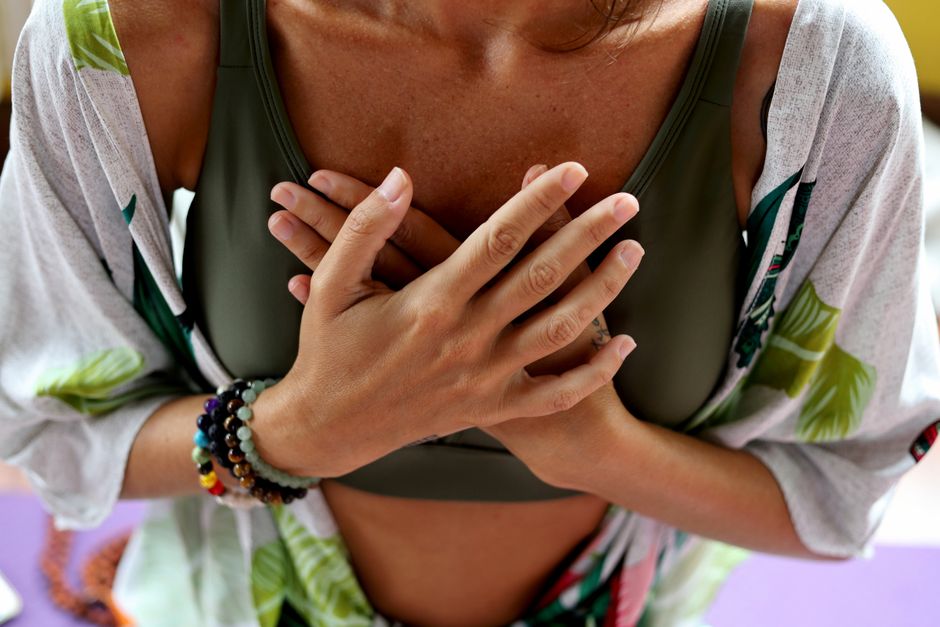
You don't need to drive to Tuggeranong or book a yoga class in Braddon. The most accessible stress-reduction tool available to Canberrans in July 2026 is already with them — and it costs nothing. Breathwork, the deliberate control of breathing rhythm and depth, has moved from the edges of wellness culture into mainstream clinical practice, and researchers say even a 90-second technique can measurably lower the physiological stress response.
The timing matters. Mid-winter in the ACT brings its own particular grind: temperatures dropped below minus three degrees on the Tuggeranong Valley floor this week, public sector workers are grinding through end-of-financial-year reporting cycles, and the broader anxieties of a property market that has left many younger Canberrans financially stretched are compounding what psychologists describe as baseline stress load. ACT Health data from 2025 recorded a 14 per cent increase in GP referrals for anxiety-related presentations compared with 2023. The demand for accessible, low-cost mental health tools has never been more pointed.
Beyond Blue's ACT team, which operates a support line at 1300 22 4636 and partners with community programs across the region, lists regulated breathing as one of four first-response techniques for acute anxiety. The Australian National University's Health and Wellbeing Centre on Acton campus has incorporated breathwork modules into its student resilience workshops since Semester 1, 2025, running sessions in Building 156 on Sullivan's Creek Road. Parkrun Tuggeranong, which draws roughly 200 participants to Greenway's Shepherd's Lookout precinct each Saturday morning at 8am, has begun posting warm-up breathwork cards at its starting line — a small but telling sign of how seriously local coordinators are taking the science.
Three methods keep appearing in the clinical literature and are practical enough to use at a desk on Marcus Clarke Street or on a bench beside Lake Burley Griffin.
The first is box breathing, sometimes called tactical breathing. Inhale for four counts, hold for four, exhale for four, hold for four. Repeat four times. It takes under two minutes. The United States Navy SEALs adopted it for high-stress performance environments decades ago, and a 2023 study published in Frontiers in Psychology found that four rounds of box breathing reduced self-reported anxiety scores by an average of 31 per cent in office workers within five minutes of practice.
The second is the physiological sigh — a double inhale through the nose followed by a long, slow exhale through the mouth. Stanford neuroscientist Andrew Huberman's lab published research in 2023 showing this pattern, which mirrors what the body does involuntarily during deep sleep, deflates the lung's tiny air sacs and rapidly offloads carbon dioxide. Participants who practiced one to three physiological sighs reported faster mood recovery from a stressful task than those who used other relaxation techniques. One breath. That's the dose.
The third is 4-7-8 breathing, developed from pranayama traditions and popularised in clinical settings by integrative medicine. Inhale for four counts, hold for seven, exhale for eight. The extended exhale activates the parasympathetic nervous system — the body's brake pedal. It can cause mild light-headedness in the first attempt; anyone with a respiratory condition should check with their GP at a Canberra Health Services clinic before making it a regular practice.
The evidence suggests consistency matters more than duration. A University of Canberra School of Health Sciences review from late 2025 found that participants who practiced structured breathwork for five minutes daily over six weeks reported sustained reductions in perceived stress, even during high-pressure periods, compared with a control group.
The Lake Burley Griffin foreshore trail between Commonwealth Park and the Acton Ferry Terminal is a practical outdoor location — about 2.3 kilometres of flat, sheltered path where a short breathwork pause fits naturally into a lunchtime walk. The Canberra Centre's quieter upper level, near the library entrance on Bunda Street, works for anyone who can't face the cold.
None of these techniques replace professional support. ACT Health's mental health intake line — 1800 629 354 — is available for anyone who feels their stress has crossed into something more serious. But for the daily friction of a packed calendar and a Canberra winter, the breath is a remarkably good place to start.
Wellness

Wellness

Wellness
Wellness
About this article
Published by The Daily Canberra
Spread the word
Daily brief
Free, in your inbox before 7am. Weekdays.
The Daily Network — local news across Australia