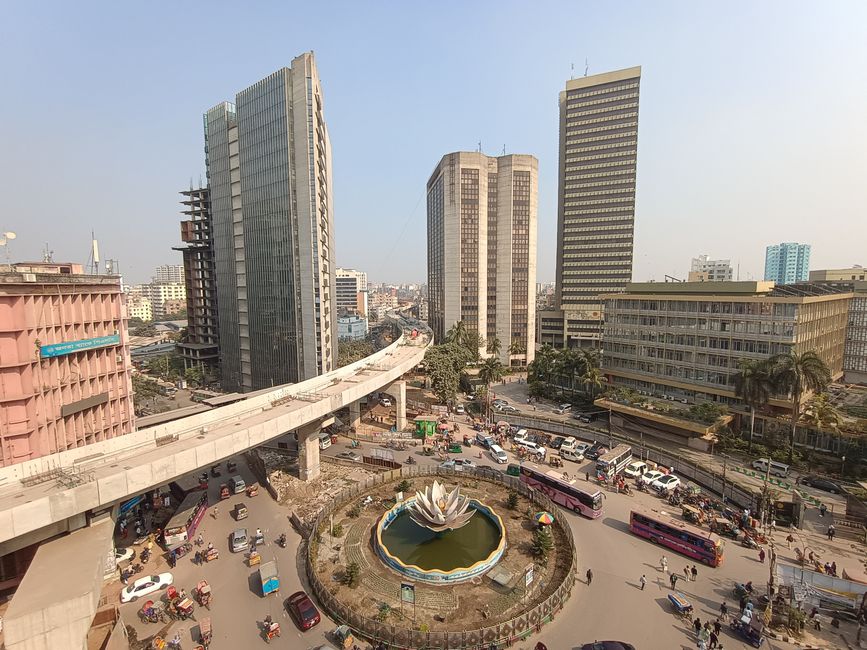
Dhaka City Corporation's land and citizen records databases contain hundreds of thousands of duplicate photograph files — scanned ID images, property survey photos, and construction permit attachments that have been uploaded multiple times across overlapping systems — inflating storage costs and slowing verification workflows at offices from Gulshan to Demra. The problem, long acknowledged inside the Dhaka North City Corporation's IT division, has no publicly announced fix on the calendar.
The timing matters because Bangladesh is midway through its Smart Bangladesh 2041 digitalisation drive, and urban agencies across the country are under pressure to migrate paper records into centralised repositories. Every duplicate image that enters those repositories carries a compounding cost: extra server space, slower search queries, and, most critically, identity verification errors that can strand a resident's application for weeks. In a city of nearly 22 million people, small inefficiencies at the data layer produce enormous friction at street level.
What Dhaka Is Actually Doing
The Dhaka North City Corporation piloted a document management overhaul at its Nagar Bhaban headquarters on Gulshan Avenue in early 2025, contracting a local firm to audit birth certificate and trade licence image archives. The audit, completed in March 2025, found that roughly one in three uploaded images was a functional duplicate — either an identical file or a near-identical rescan of the same document. No public report has been released on what the remediation cost or how many records were corrected.
The Registrar General's Department, which handles national identity and civil registration data from its Agargaon office complex, uses a separate system with its own deduplication gap. Sources familiar with procurement documents say the department has been evaluating perceptual hashing software — a standard technique that compares image fingerprints rather than pixel-by-pixel content — since at least 2024, but no contract has been awarded as of this week.
Meanwhile, Dhaka South City Corporation, which manages dense historic neighbourhoods including Old Dhaka's Chawkbazar ward, still processes many property-related image submissions through a hybrid paper-and-scan workflow that predates any deduplication standard.
How Karachi and Lagos Moved Faster
The comparison with similarly sized cities is uncomfortable. Karachi Municipal Corporation rolled out automated image deduplication across its citizen services portal in 2023, reducing its property record database size by an estimated 34 percent within six months of deployment, according to the corporation's published annual technology report. The tool cost the equivalent of roughly $180,000 USD to license and integrate — modest by infrastructure standards for a city of Karachi's scale.
Lagos State Government implemented a comparable system inside its Land Use and Allocation Committee database in late 2022, after a World Bank-backed urban governance grant specifically earmarked deduplication as a deliverable. Lagos officials cited a drop in land title processing times from an average of 47 days to 19 days in the year following implementation, figures the state government published in its 2024 service delivery review.
Dhaka has no equivalent public benchmarks. The city's IT spending is reported inside the broader DNCC annual budget, which for the 2025-26 fiscal year stood at approximately Tk 6,200 crore, but technology and data management line items are not broken out in a way that allows external scrutiny of what is being spent on records infrastructure specifically.
For residents, the practical consequences are visible at ward offices in Mirpur, Uttara, and Motijheel, where staff manually flag duplicate submissions during application processing — a step that exists because the digital system cannot do it automatically. A trade licence applicant in Mirpur Section 10 told this reporter informally that her renewal application stalled for three weeks in 2025 because a duplicate photo upload had created a conflicting record, though she eventually resolved it in person.
City planners and technology procurement officials at DNCC and DSCC have until the end of the current fiscal year — June 2027 — to present updated digital infrastructure roadmaps under the Smart Bangladesh framework. If deduplication tooling appears in those roadmaps with funded line items, Dhaka may close the gap with Karachi and Lagos within two years. If it doesn't, the city's expanding digital archive will keep accumulating the same images, over and over, filed in triplicate in the dark.